
Asturian company Dogram, specialized in metrology and 3D digitization, is consolidating the concept of Metrology 4.0 through services based on technologies such as laser scanning, photogrammetry and precision lasers, bringing advanced solutions to an increasingly demanding industrial sector.
The digitization of industrial spaces and processes has become an essential tool for companies looking to improve their competitiveness. Metrology and 3D digitization are the areas of expertise of Dogram, an Asturian company founded in 2013 by Carlota Abello, Rocío Cachero, David Cañal and Antonio Martos.
Although the company initially focused on the heritage and architectural sectors, everything changed in 2015 as a result of the ‘Se busca CEO’ programme run by CEEI, through which Dogram brought in a new partner and shifted its focus towards the industrial sector. This transition was carried out progressively through studies involving leading industrial companies and engineering firms in Asturias, with the aim of identifying their challenges and potential solutions. “We realized that we could provide technological solutions by applying the knowledge we already had to industrial processes and facilities. The greatest challenge was adapting our knowledge and technology from one sector to another,” explains Rocío Cachero, co-founder and Technical Director of Dogram. Although more than 90% of the company’s revenue currently comes from industrial projects, “we still receive requests and continue to carry out projects in the architecture and heritage sectors,” adds Carlota Abello, co-founder and Business Development Director at Dogram.
Working with companies such as ASTURFEITO, CEPSA, IDOM and Empresarios Agrupados is no coincidence; it is the result of hard work, innovation and talent. At Dogram, the company explains that it invests significant resources in the professional development and technological upskilling of its team, as “they are an essential asset for securing and delivering high-value projects.”
Innovation is another of the pillars underpinning the company’s growth and evolution. However, innovation does not always mean developing a technology from scratch; sometimes it means adapting an existing technology to make it work better.
“Our working methodology is not about inventing a new 3D capture method. Rather, it is based on ‘pushing existing technologies to their limits’ in order to take them to a higher level,” explains Rocío. Innovation is indeed present in Dogram’s day-to-day activities. One example is the company’s growth strategy, which is focused on the automation of projects and on providing higher-value services to industry through Metrology 4.0 and digital twins, explains Carlota.
Nobody underestimates the enormous challenge posed by the maintenance and modernization of industrial facilities, particularly those that have been in operation for 30 or 40 years. This is quite different from newer facilities, which are generally fully adapted to Industry 4.0. Older industrial facilities are gradually recognizing how information and knowledge can be used to optimize processes. “We are working to provide these industrial facilities with tools and information through 3D digitization and the transition towards digital twins,” explains Dogram. “These tools can support predictive maintenance, occupational risk prevention and project planning,” concludes Carlota.
Digital twins are, in fact, an essential solution for carrying out design modifications to industrial facilities. These technologies can generate cost savings and reduce potential problems when implemented rigorously and accurately.
Dogram does not provide specific figures, as “every project is different,” but the benefits and savings enabled by remote collaborative work between teams in different countries using a digitized model — together with the ability to avoid physically visiting a facility every time a minor verification is required — clearly demonstrate that this way of working is here to stay. This is why the company is proud to have many customers who have become “converts” and who no longer consider undertaking an engineering project in a facility without first having a 3D digital model as a foundation.
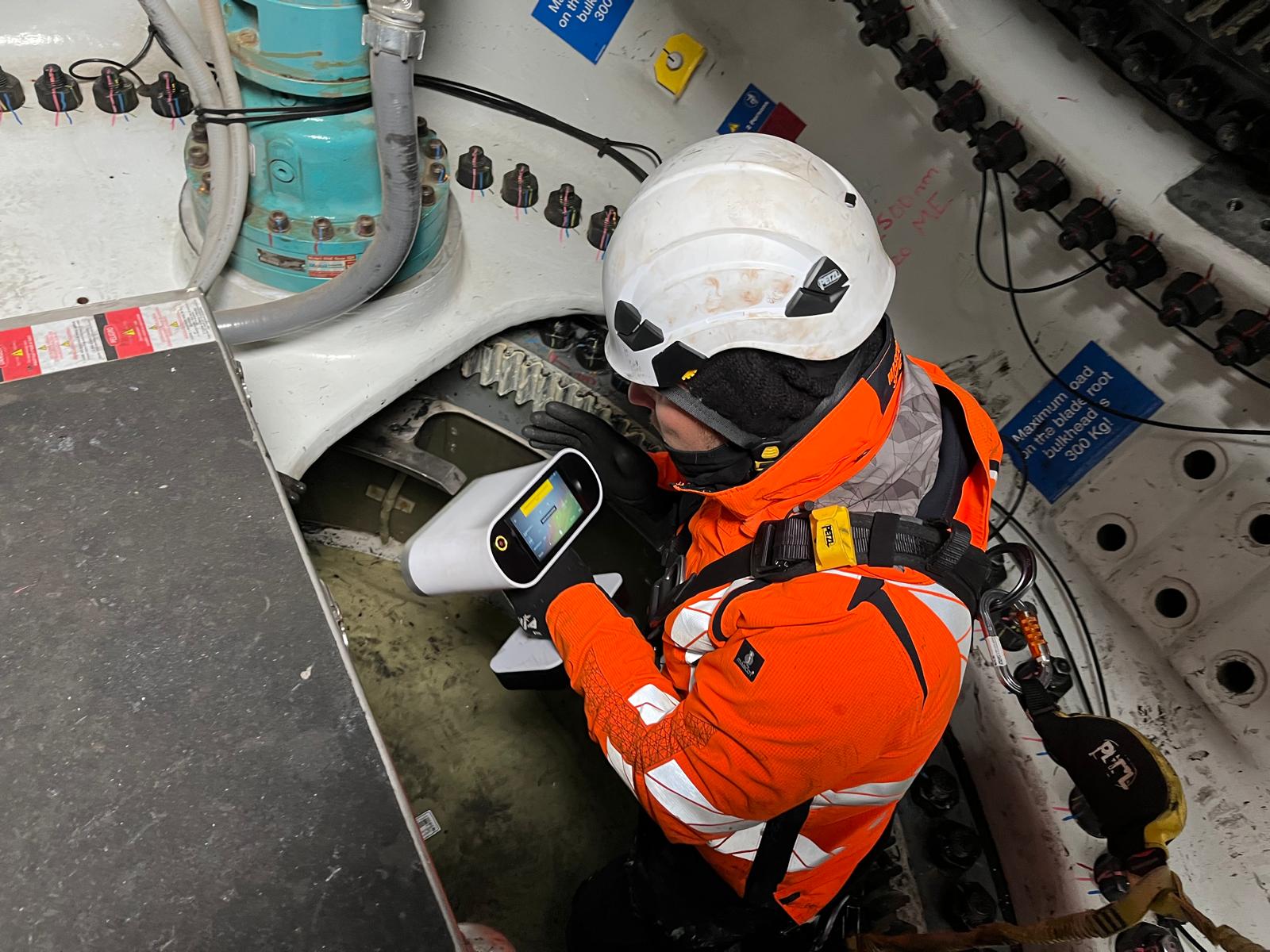
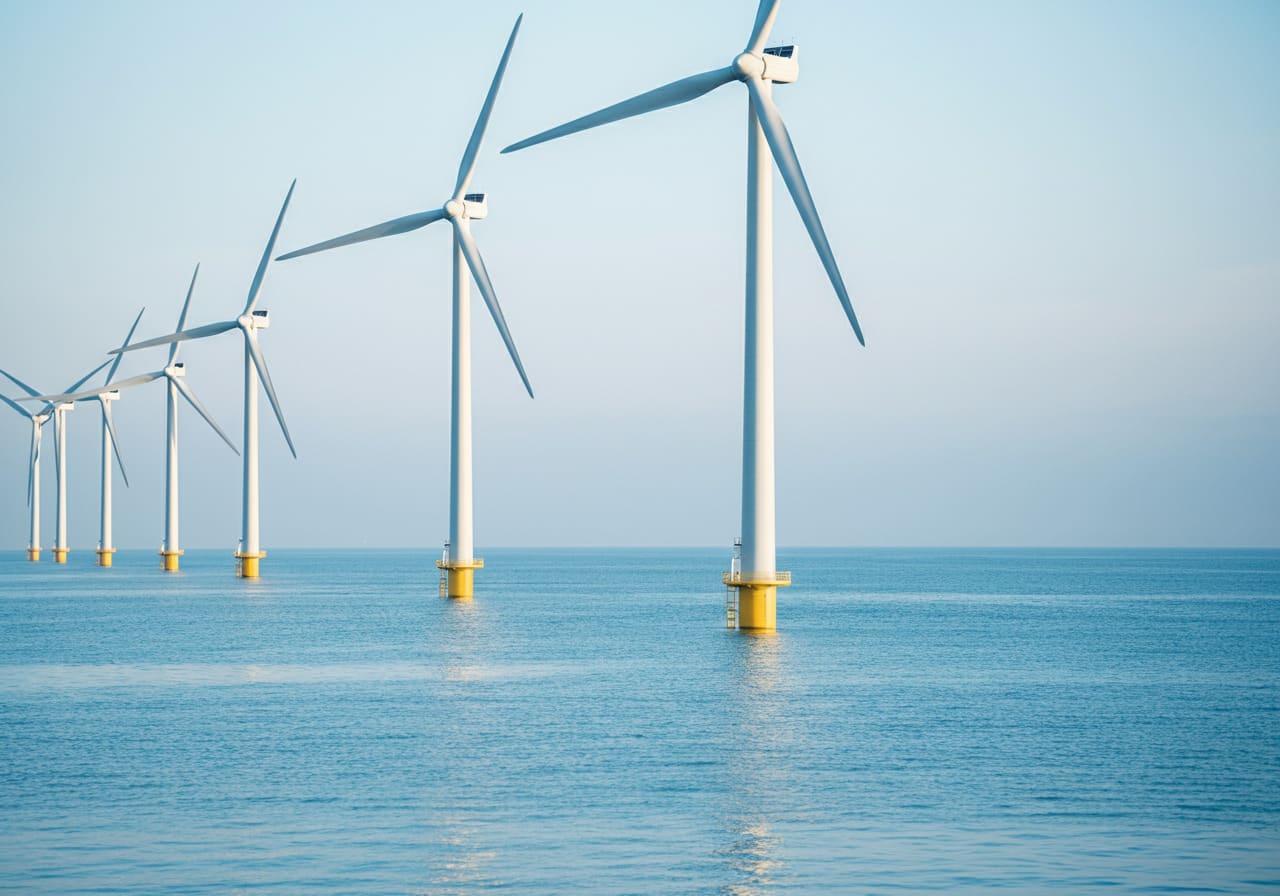
Another key area of activity is dimensional inspection of manufacturing processes. Today, major companies involved in the manufacture of specialized equipment are increasingly demanding when it comes to design and quality control, giving rise to new concepts such as Metrology 4.0. “We are highly specialized in this area. In fact, we have already provided services both nationally and internationally, particularly for the onshore and offshore wind energy sectors,” explains Carlota. As Rocío explains, “we are helping our customers optimize their manufacturing processes on site. In some cases, they had traditionally manufactured their products in a conventional way, and we help them make the transition towards 3D digitization, achieving significant cost savings while enabling them to deliver a higher-quality product.”
Introducing innovative, detailed and visual dimensional inspection reports into the manufacture of equipment and components allows everyone involved in a project — often companies located in different parts of the world — to share a common, objective and rigorous ‘language’. “This way of working facilitates analysis and strategic decision-making, while also providing a means of resolving potential disputes that may arise during the development of highly complex engineering projects carried out over long periods of time,” says Carlota.
Solutions for the nuclear industry
The nuclear industry, like many other sectors, has its own specific challenges and requirements. Due to radiological considerations, in some cases it is preferable to carry out planning and analysis digitally rather than physically accessing certain areas of these facilities. These safety restrictions make the nuclear sector one of the most demanding industries. “For us, working in the nuclear field represented a huge step forward in terms of quality. It is a strategic sector that requires rigor, methodology and information security,” says Rocío. “Since 2019, we have worked on major 3D digitization projects at four of the five nuclear power plants currently operating in Spain, earning recognition for high-quality work carried out with great professionalism and reliability.” “Receiving this kind of feedback from customers who operate at such a high level of demand is a great motivation for us to continue improving every day,” explains Carlota.
One of the projects Dogram carried out in this sector last year involved a sensitive part of the nuclear reactor containment structure. In this particular case, the component had not been documented, meaning that if replacement or repair became necessary, there was no clear solution available. Due to the tight timeframe, Dogram had to push the technology to its limits, using a long-range laser scanner to characterize a small sample that would subsequently be used for reverse engineering.
A promising future
Dogram’s future is ambitious and focused on continuous evolution. The company’s strategy is centered on continuing to establish itself as a leading company in metrology and 3D digitization in Spain while expanding its international presence. Its technology monitoring and innovation strategy will enable Dogram to continue providing better visual solutions and more immersive environments for digital twins, incorporating technologies such as virtual reality and sensor technology. The company is determined to continue enriching the services in which it already specializes. “We want to keep improving and avoid offering standard solutions,” emphasizes Carlota.
Dogram is optimistic about the outlook for Spanish industrial companies. The company believes that businesses are becoming increasingly aware of the importance of digital transformation, Industry 4.0 and Metrology 4.0 — areas in which Dogram “can be a strong growth partner.”
Source: Conecta Industria